Library School Confidential (Part 1)


In May, I graduate from Simmons College with my MLIS with a concentration in archives. I attended school full time, and will have completed the program in two years. My experience is probably not typical of most archives students for two reasons in particular: first my background is in writing, not history, which is a very common undergraduate major for archivists; and second, I chose to complete the program (which is in Boston) while commuting from Providence, and I don’t drive, so I relied completely on my bike and the commuter rail. I know a few other students who did this, which made me feel less crazy for choosing not to move to Boston. This is definitely not intended to be an objective overview of library school at Simmons or anywhere else, more a personal reflection on my last two years. If you want to read a more nuanced review of Simmons’s program, you should check out this post on Hack Library School, which I think provides a little more information about what the program is really like. For my own part, I’ll say that I mostly had a really good time at school. The archives track is extremely structured, so I only got to choose two of my classes freely (I took Digital Libraries and Photographic Archives). I learned a lot both in class and through jobs and internships. I found that what I learned in class was very consistent with what I learned in all of my workplaces, which I think speaks well to how current the curriculum at Simmons is.

I think one of the strengths of Simmons is that it’s in an area full of libraries, museums, and other historical and cultural heritage institutions.  In my two years of school, I worked with a correspondence collection from the Mary Baker Eddy Library, art from the Anthony Quinn Trust. I processed textual and audio collections at Northeastern University, which has an amazing social justice collection in its archives. I’ve worked in the digital archives of one of NARA’s presidential libraries for the past year, and for the past three months of worked with photography degree projects at RISD. I’ve also helped work on the Uni, a portable reading room for public  space that provided a really inspiring creative outlet for me, and reminded me about why I got excited about library science in the first place, and how much potential there is for exploration in this field. As this hodge podge of experience probably suggests, this means I’ve been working multiple jobs and internships concurrently at almost all times. Add a few hours of commuting a day to that, not to mention homework, and it probably seems really obvious that I’ve run myself ragged. I have. This past semester, in particular, I’ve really felt that I’d taken on maybe just one two many things, and was at risk of doing them all poorly. Fortunately, I’ve managed to muddle my way through it. I’ve of the mind that when I’m given an opportunity, I ought to take it. At least, I think that’s the case now, while I’m still figuring out what I want to be when I grow up.

I started the archives program dead set on working with oral histories. I would still love to do this, but as it happened, my system of accepting opportunities as they were presented to me led me to work primarily with photographs and digitization/digital preservation projects. I’m definitely not complaining. I started the program with very minimal technological skills (I collect manual typewriters and used to work with microfilm, so no, I’ve never been at the forefront of technology.) But I threw myself into learning, and had a really delightful moment when my advisor referred to me as a “technology person,” something I never ever thought I would be called.

For me, going to library school was a lot like going to school for writing. I feel that in both programs, I learned skills that should allow me to fit into many different settings, working with materials from many different disciplines. As a person who is interested in too many different things, I love having studied subjects that in essence can allow me to infiltrate and contribute to so many professional environments. I am very tired these days, so I don’t know that I would attempt to convince anyone to go to library school necessarily, or to commute from Providence to Boston on a daily basis. But if it’s what you want to do, I will say it can be done. (There are also some great places to work in Providence, but I think Simmons has a more established connection with institutions in Boston, so there are a lot more internships and student positions there.) And you will probably get to do some really interesting things, and if you’re in archives, touch some pretty amazing letters. I’ve gotten to get my grubby (actually extremely sterile) hands into letters from Susan B. Anthony and Francesca Woodman’s student portfolio, to name only a few things. I’ve also heard rumors about an official special collections librarian concentration at Simmons, which I think would be a really fun program to go through. Not that I’m looking to go back to school anytime soon.

Oh, hi.

I have again forgotten to tend to this space. However, now that school is coming to a slow, grinding halt (forever!), I suspect I’ll have a little more time to write, and some exciting developments to write about.

I’ve been reflecting a bit on my experience in library school,  in part spurred by a friend who is also in my program asking me what my dream job (not a job currently posted; just theoretically dream job). I’ve actually had a difficult time answering that. When I first looked into a library science/archives program, I felt that I knew exactly what I wanted to end up doing. But in the two years that have passed, I’ve become aware of so many new possibilities that I feel like any vision I had of a career path has completely lost its shape. I will have more to say on this subject soon.

For the time being, I will at least say that I am taking my first post-graduate step toward figuring it out by accepting a three-month position in Salzburg, Austria this summer. In June I’ll become the library intern for the Salzburg Global Seminar at Schloss Leopoldskron, and I am both dumbfounded and unspeakably excited by this unexpected turn of events.

In the meantime, I have to finish out my last semester at school, as well as my current job, sneak home to Pennsylvania for a week, and move into the house I’ll live in when I get back from Salzburg in September. It’s going to be a very busy month and a half, to say the least, but for once I legitimately can’t complain.

Schulana Kid-Paillettes

I don’t have as much time for knitting as I’d like these days, but gifts always provide a good excuse. I have three in various stages of progress at the moment. One of those stages is the buying-yarn-stage, which is often my favorite. Or at least, it’s the easiest.

The yarn pictured above is Schulana Kid-Paillettes, for a lacy shawl for a friend’s wedding day. I didn’t know anything about this yarn prior to ordering it, except that it looks really beautiful. I actually only came across it because as I was looking for the right yarn in the right color (and having a pretty unsuccessful time of it), I remembered Cirilia talking about the fact that Skacel distributes a lot of amazing yarn that isn’t as well-known as a few particular standouts like Zauberball. So I went and peeked at the Skacel site and found this. It’s a very satisfying feeling to discover a new yarn to try out. I’m really excited to start knitting with it.

It’s also worth noting that I ordered my yarn from Abundant Yarn, and it arrived within two days with standard shipping. Pretty amazing service.

Pittsburgh

While doing a little research for a class project on the Charles W. Cushman Photograph Collection (worth checking out), I came across this picture of Pittsburgh’s Cathedral of Learning (the world’s second-tallest educational building, if you wondered), taken by Cushman in 1941, and now I think I will let a dull feeling of homesickness wash over me today. I took a few things for granted when I lived in Pittsburgh, and this view was certainly one of them.

And Guerrilla Libraries

And what more can you say about books? They’re the greatest things ever, and everyone should have more.

I know I’ve mentioned my love of tiny unconventional libraries before, but I will never stop talking about this subject. Read this really inspiring story about New York City’s phone booth libraries.

And while you’re at it, check out some of my other favorite tiny libraries and library-like structures:

Clinton County’s Book Booth (also in an old phone booth!)

Little Free Library

SPREAD Pop-Up Libraries

The Uni (of course)


Internet Archive

You’ve probably already seen this NY Times  article about the physical archive of the Internet Archive, but just in case, there you go.

The Internet Archive is a pretty amazing example of how digital and analog formats can really be used well to enhance each other. I think the IA usually comes up in conversations related to archiving web pages (or in my experience, that has often been the case), but it also houses published texts, audiovisual materials, and more. It’s pretty amazing.

The NY Times article brings up some good points about digital and physical copies, and the importance of preserving both. I can’t stress that point enough.

An easy example: in one project I’m working on, digitizing samples from photography portfolios, I occasionally come across a portfolio that consists of nothing but a zip disk.


Yup. Like those. This makes me crazy. But it’s also a good reminder that, when possible, a physical copy should be kept along with the digital. I’m pretty psyched that digitizing materials brought the IA to this conclusion as well.

This is a topic constantly on my mind, and even more so after reading this post from The Signal about personal digital archiving. This is such an interesting and important subject. I love the idea of the librarian stepping into the role of instructor/consultant in this area. I know on a personal level, going to library school has completely changed the way I manage my own personal data (though I’m still far, far from perfect). Even simple things like using more effective file names make a huge difference in my life. I was formerly one of the aggravating people saving things as “Monday.doc,” “paper.doc,” or “etc.jpg.” Those were not helpful a few weeks down the road, let alone a few years.

Anyway, I’ve digressed. To tie it all together, enjoy this picture of my spring break work day:

You can tell that it’s spring break because I’m knitting while my scanning, instead of doing homework. Though I’m doing plenty of that this week too. Both projects will get more screen time later, so I suppose stay tuned.

Viewshare

LoC and Zepheira have recently launched www.viewshare.org, a really interesting online tool for sharing archival collections online. I’ve been playing around with this a little bit in the past few weeks, thinking about ways it can enhance and photographic collections in particular. I’m especially interested in the mapping features as a tool for connecting holdings to present-day physical locations.  Check out this press release for a little more information. I’ve had a great time exploring the website, and can already see dozens of ways that this could help create new access points for online users. Also nice: it’s free. Can’t argue with that.

Family Photos

I spent part of my Christmas vacation with my family going through my grandparents’ old photos. We document and save a lot in my family, so I barely scratched the surface, but some of what I did get through was really amazing. I took a few pictures just for my own reference back in Providence.

I count myself among the lucky, knowing that I have such a well-documented family history. This is not to say that I know it all myself, but that’s what makes this photo organization project so appealing to me.

When I worked in microfilm, amateur genealogists (one of my very favorite types of researcher) were always especially excited to find a photo accompanying an old news story. There’s something about a good visual artifact that brings everything much closer to home.

I’m already looking forward to getting back to Pennsylvania so I can continue sorting and rehousing these photos. I came across some really interesting storage methods from years past. Some photos were stored in yellowing plastic wallet-like cases, some were loose in boxes, and still others were in old albums whose pages had begun to fuse to the photos. For the most part, everything was in really good condition though, fortunately. A little weeding out of unsavory acidic materials and rehousing in nice acid-free containers, and we should be back in business. I wholeheartedly recommend this as a nice gift archivists can give to their families for birthdays or holidays. My family is psyched, and I get to sharpen my skills and have an excuse to buy a few dreamy archival storage supplies. We all win. (Bonus: I learned that taking pictures of fat squirrels is something of a family tradition. Double win.)

Thinking Photographically

Very very busy, as usual. Most of my work this semester is photography-oriented, which is both exciting and intimidating (particularly intimidating when it comes to assessing photography as art, rather than documentary evidence). In spite of the slight intimidation factor, I’m really enjoying all of my new ventures. This is a very brief post to share a few resources of interest.

1. Pavel Maria Smejkal’s Fatescapes. We looked at these briefly in my photographic archives class, and it was incredible how many students recognized these landscapes even without the figures, which I think are generally what we consider the iconic parts of them, present.

2. The photography of Emmet Gowin. Choosing only three of his photographs to digitize was practically impossible. (The girl with the dolls, top righthand corner on this page, was a favorite of mine though.)

3. Like Barack Obama, I recently started using Instagram, and as much as my surly Polaroid-purist teenage inner self wants to hate it, I don’t. I may even love it.

4. This is a less recent discovery, but worth noting. If you haven’t visited My Daguerreotype Boyfriend, it’s worth a peek. It’s not strictly limited to daguerreotypes,  but it is strictly limited to handsome historical boyfriends. Pick your battles, I always say.

Take care, stay warm, be good, etc.

And…Done!

My semester is officially over, as of 9pm tonight. Just one more to go before I enter this “real world” I keep hearing about. I’ve been busy with all manner of exciting preparations, including filing my petition to graduate, working with my advisor on my resume, and scrambling to get those last assignments turned in so I can focus on reading for fun, finishing my holiday knitting (almost there!), and even taking on a small bit of sample knitting this week.

There are things on my mind that I want to share, many of them yarn related. Tonight my heart and brain belong to my cat and the single adult beverage (Smuttynose Winter) that I’ll consume before happily falling asleep without setting my alarm for tomorrow. For now, a short list of those things:

1. This sweater, from J. Crew, which I will probably replicate when it’s time for personal knitting again in January.

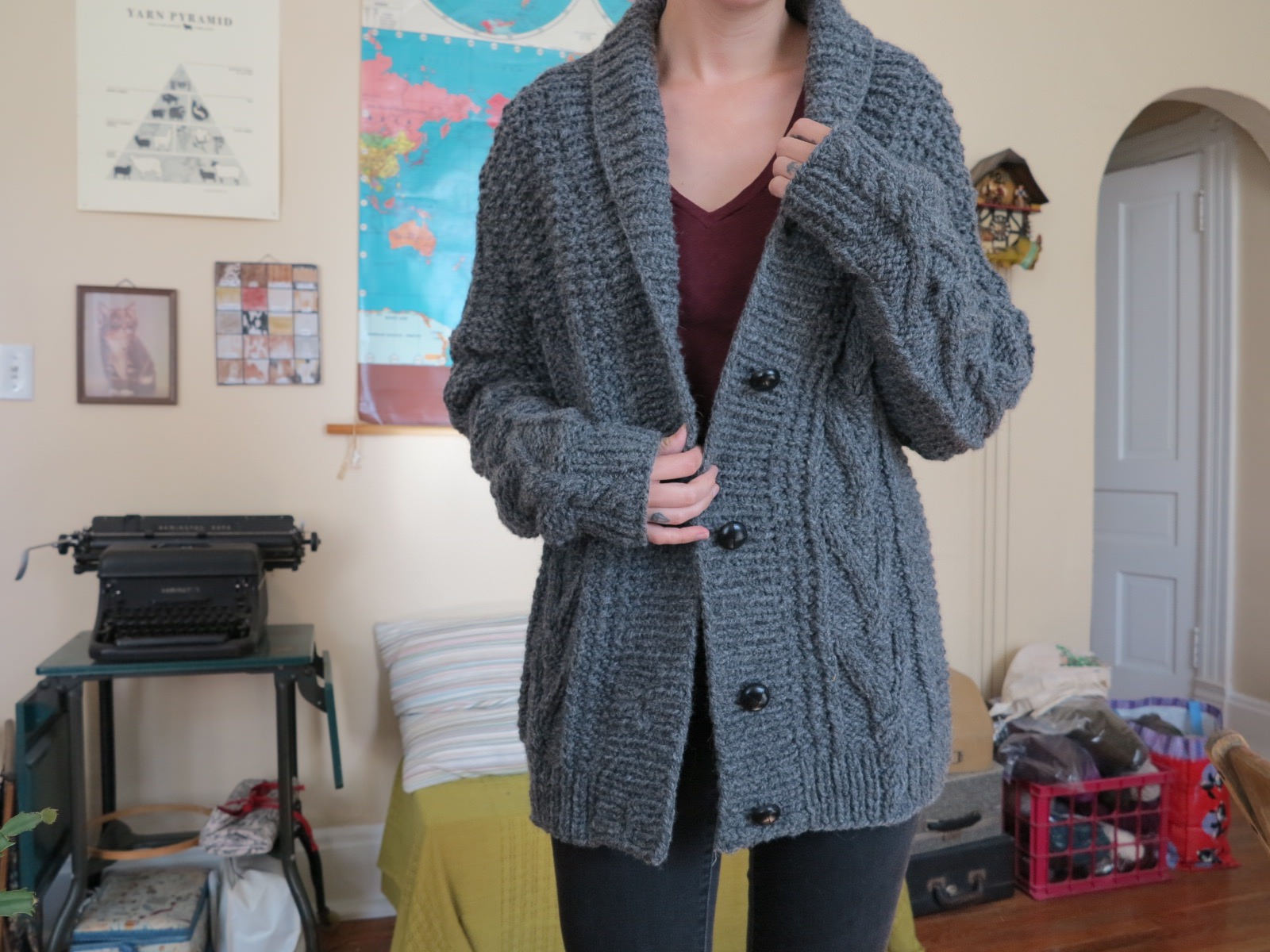
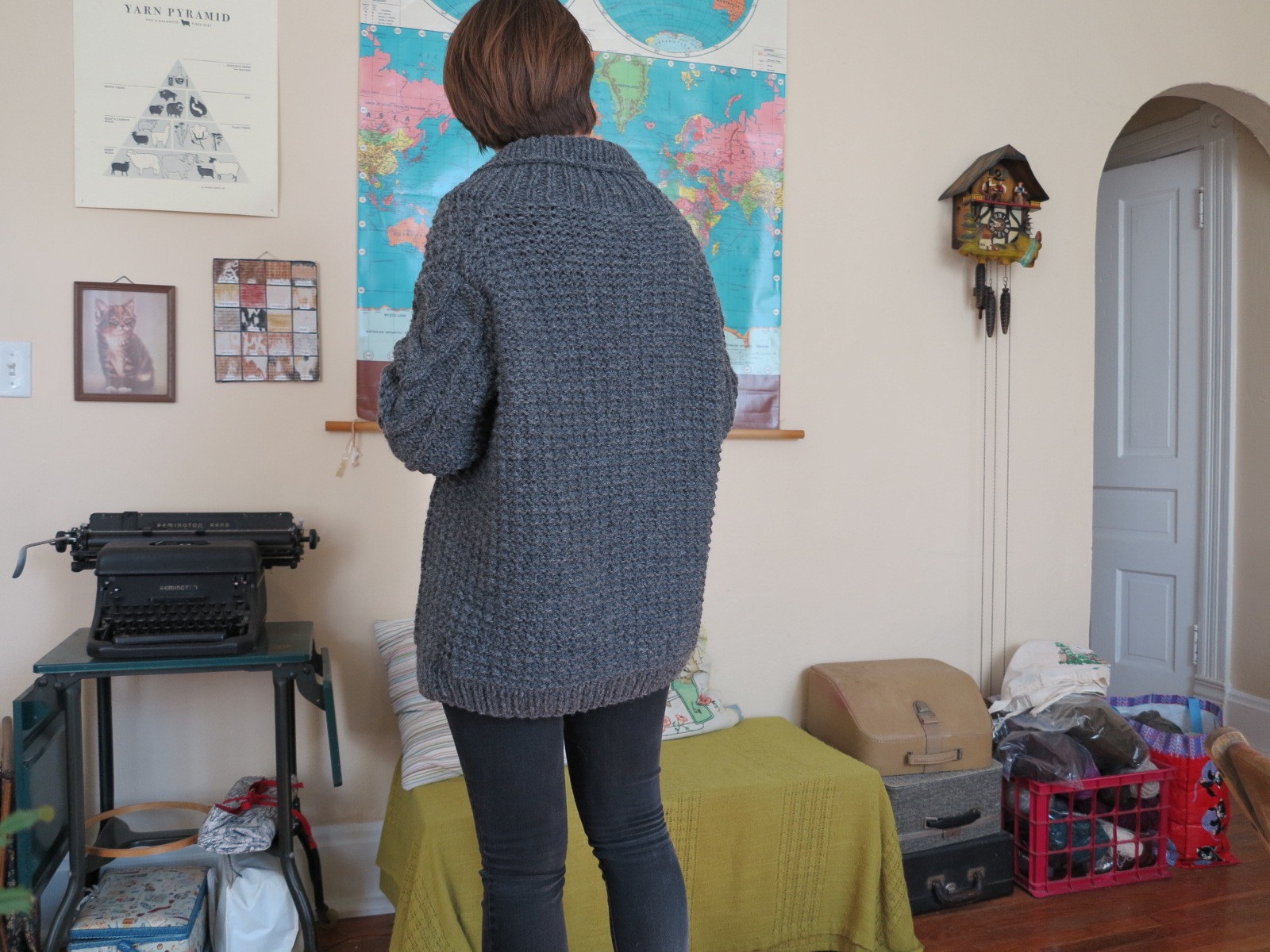
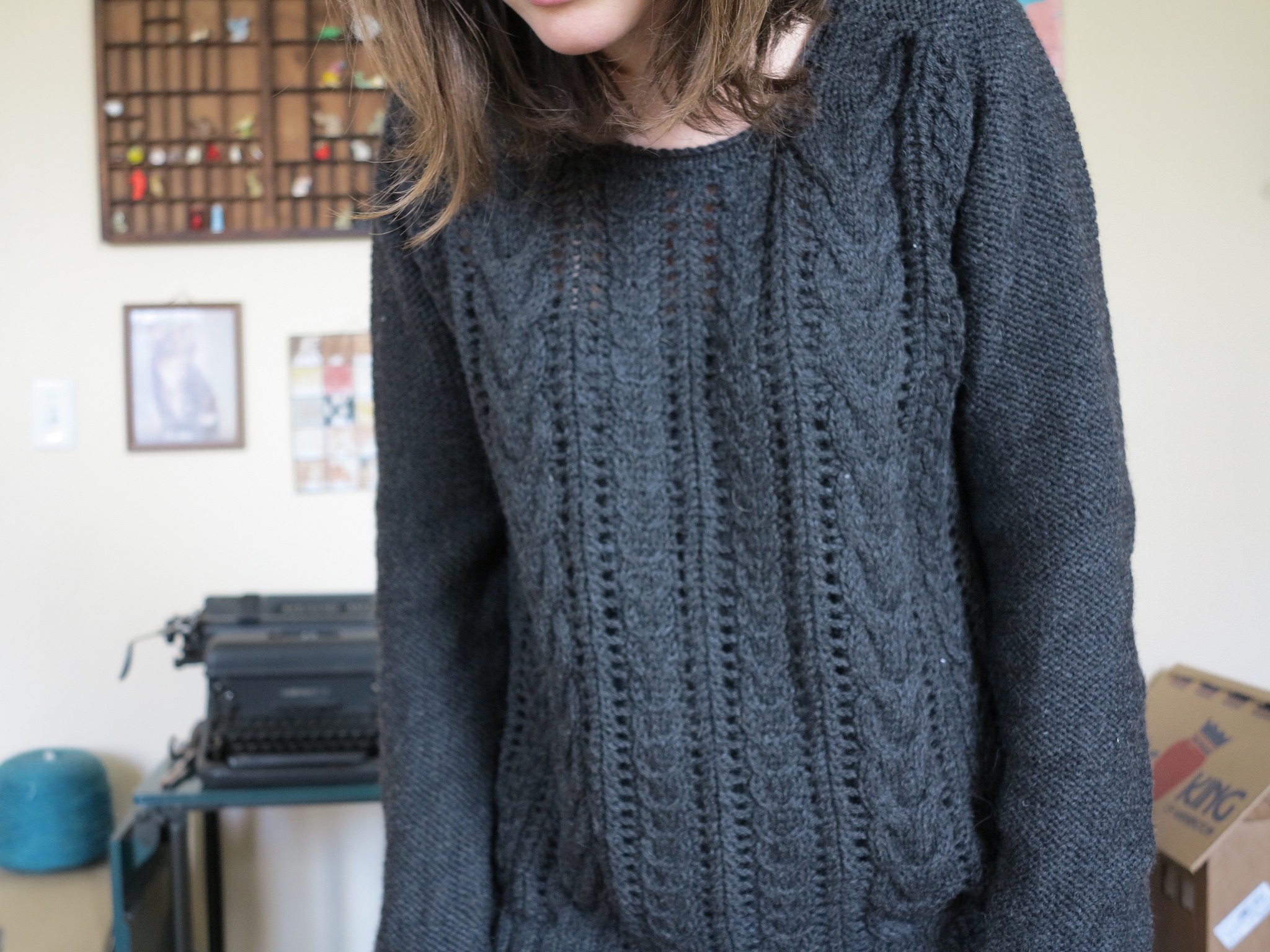
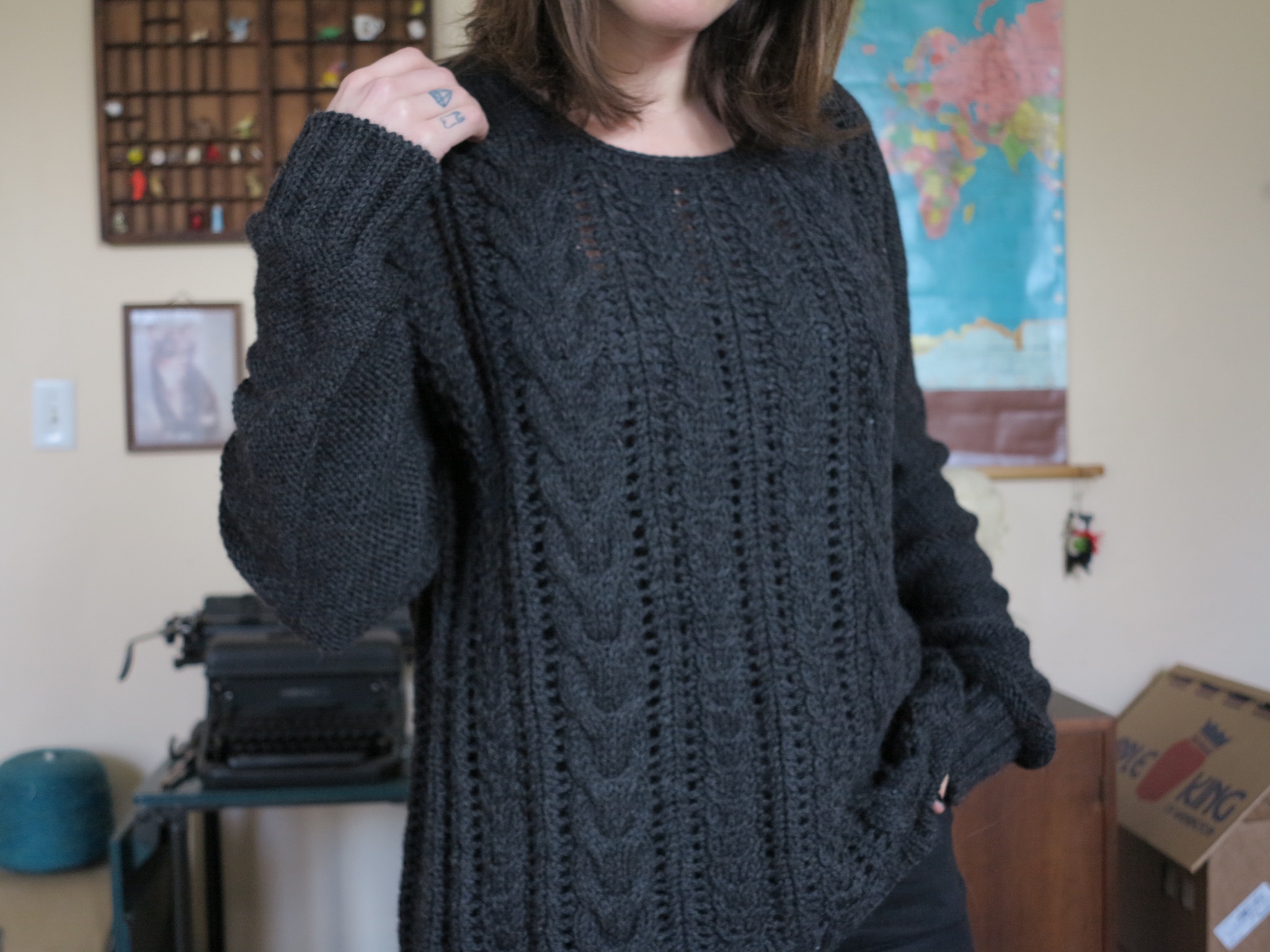
2. A recent test-knitting project for Erica Knits. I’ve been wearing this a ton, and finally got around to taking a few photos. (Scout managed to sneak into all of them. Dogs are truly no better than cats. You heard it here first.)

3. My holiday knitting, which I won’t mention until after it’s given out, in case any family members are peeking.

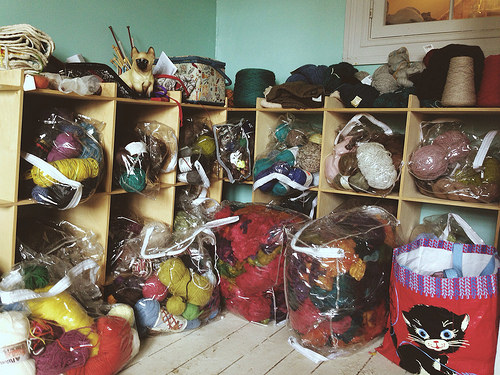
4. I recently um, audited my yarn stash. Or at least a majority of it. As the new year comes around and I feign resolution, it seems like a good time to think about what I’ve knit in the past year, what yarn I have on hand, and how I might be able to tackle the kind of enormous task of using it thoughtfully. I’m a little embarrassed by how much stash I’ve accumulated. But you know, there are worse problems.

So. Things to say, in the future. But for now, goodnight folks. I’m tired.

Follow

Get every new post delivered to your Inbox.